Drama comes to dinner
OLIVIA WILDE ENTERS A NEW CHAPTER OF HER DIRECTING ERA WITH THE INVITE
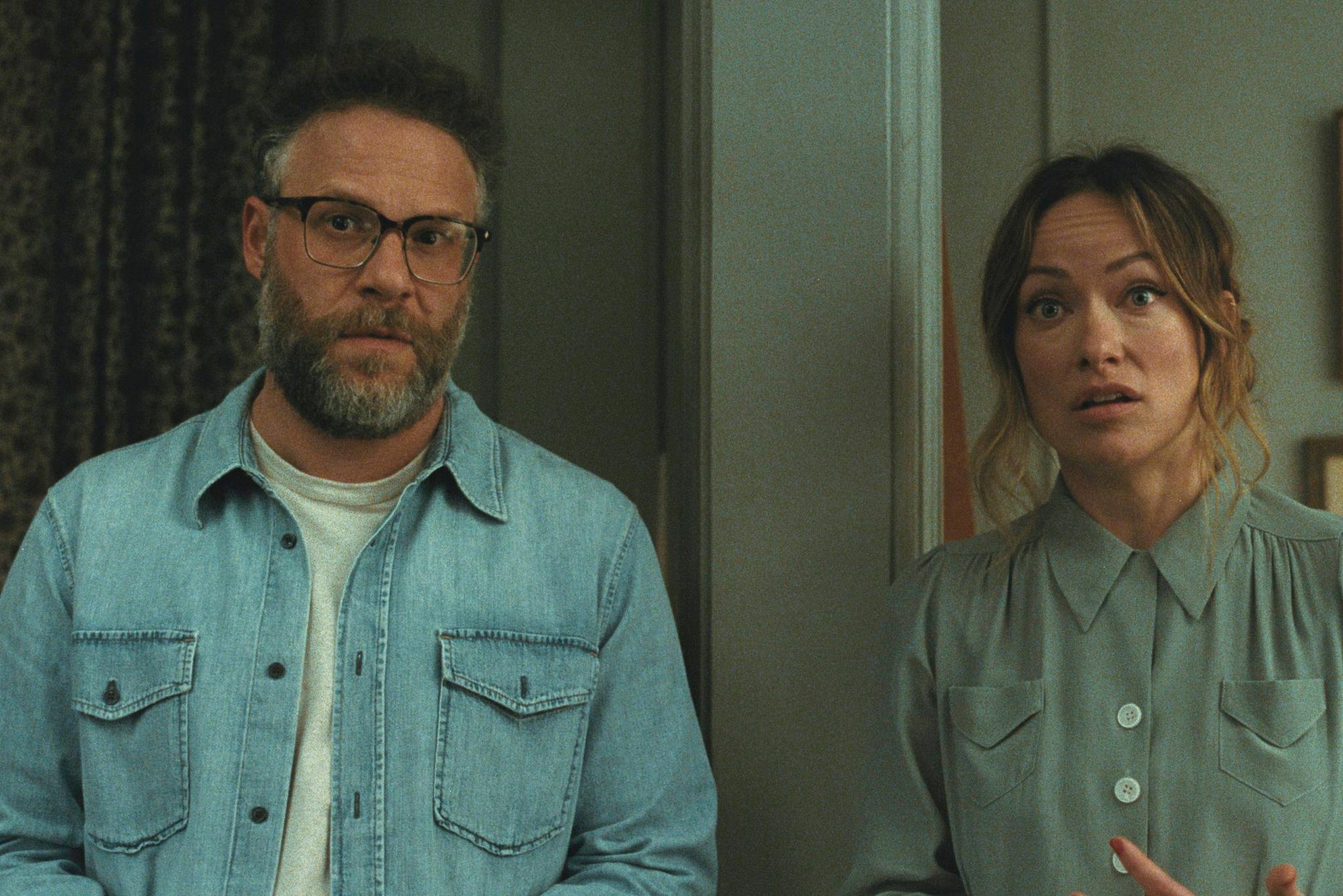
YOU COULD NEVER call Olivia Wilde a one-trick filmmaker. In just three films, each new turn from the actor-turned-director has been stylistically, and tonally, different from the last. First there were the raucous high-school hijinks of Booksmart, then the ’50s-inspired dystopia of psychological thriller Don’t Worry Darling. With her third film, The Invite, Wilde turns to dark comedy, dissecting marriage through an intimate four-character chamber piece set over one calamitous dinner party.
As a director, Wilde is inspired by the likes of Rob Reiner, Paul Thomas Anderson and Mike Nichols, all of whom have experimented with genre. Nonetheless, she sees a throughline across her three features: “I think if there was to be a common denominator, it would probably be relationships,” she tells Empire. Her films all focus on love — platonic and romantic — being put to the test. “I’m really interested in the complexity of relationships, and I think each film I’ve been lucky enough to direct has given me a chance to really explore the intricacies of relationships at different stages of life.”
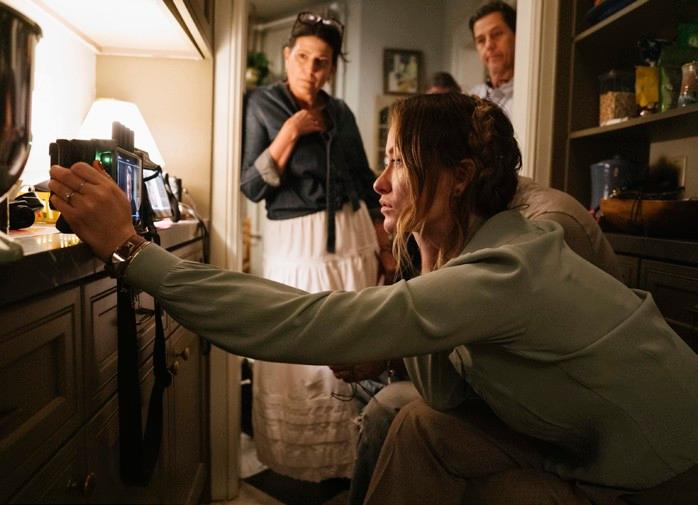
The dynamics at the heart of The Invite are especially tantalising. Based on the 2020 Spanish film The People Upstairs, the film sees Wilde star alongside Seth Rogen as a couple whose crumbling marriage is laid bare when they invite over their seemingly loved-up upstairs neighbours (played by Penélope Cruz and Edward Norton).
After cutting her teeth on big-budget filmmaking with Don’t Worry Darling, Wilde consciously wanted to pivot to a pared-back approach. “For a great chef, I always think that the simplest meal really demonstrates the skill,” she explains. “I was curious to see, can I make the most simple meal delicious? Can I boil down this endeavour to just the core source of what makes it interesting, which is the relationships in this room?”
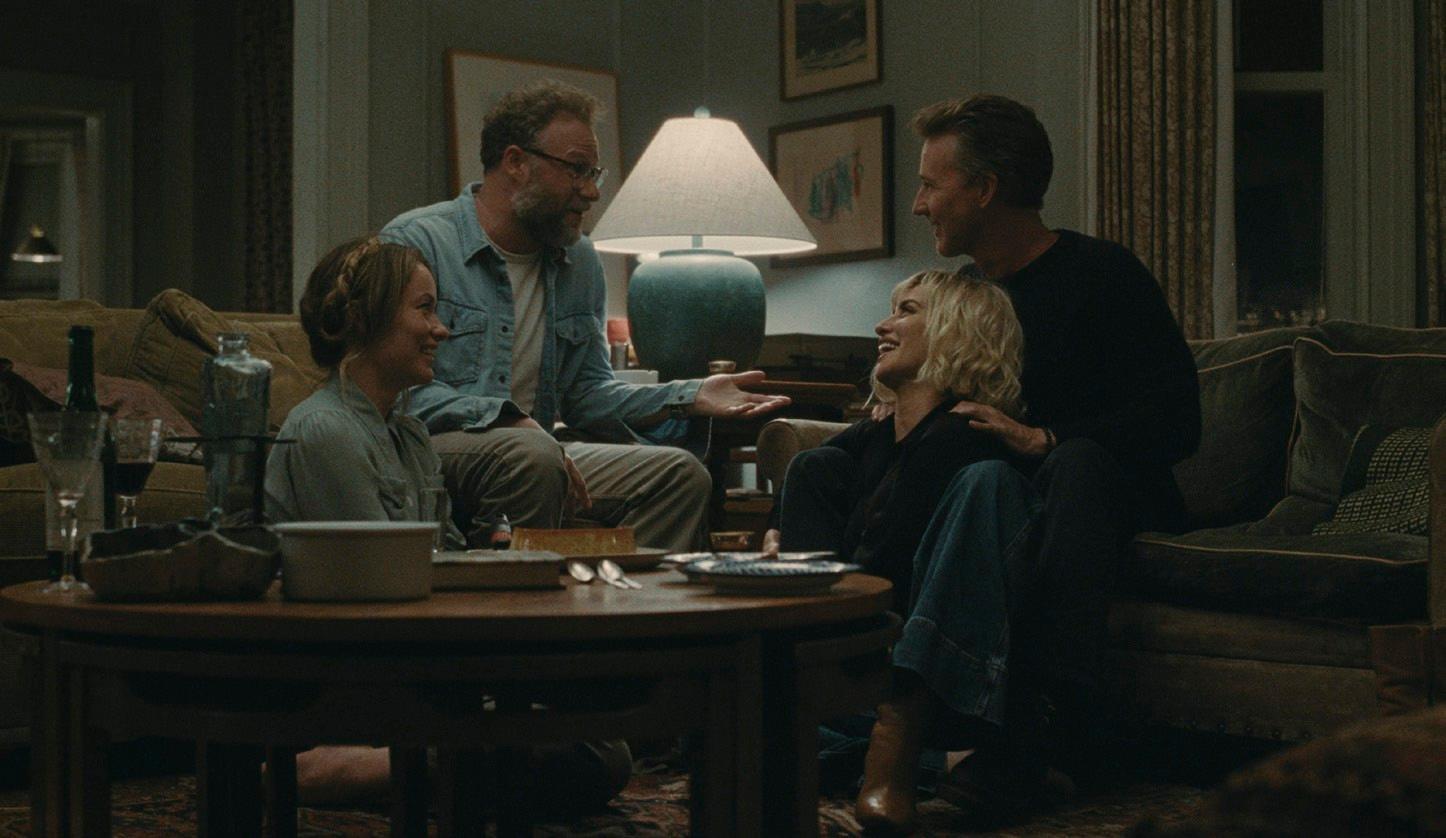
But crucially, Wilde stresses, scaling down didn’t necessarily give her an easier task. “It required pulling together this extraordinary group of people to make the film,” says the director, “who took on that challenge of: can we make one apartment interesting for two hours?” The Invite is set almost entirely within a modest flat, which was built on a soundstage using an inventive floor plan, with voyeuristic views of neighbouring homes through the windows. “The space had to be a character,” Wilde explains. “And the space had to transform as their experience was transforming, and had to feel more claustrophobic and more intense.”
She believes that every film she’s worked on has presented a seemingly impossible mountain to climb. With Don’t Worry Darling, it was handling an expansive production across multiple locations while under Covid restrictions. The Invite, meanwhile, had a range of hilly peaks: Wilde shot on 35mm, making it her first feature on film. “We also shot in order,” she adds, “which is something I’ve never done before as an actor or a director.” The shoot itself ran for just 23 days: “There is something powerful about the pressure-cooker of a short schedule.”
The final pieces of the puzzle were the film’s powerhouse cast, who workshopped the story for two weeks with screenwriters Rashida Jones and Will McCormack. Though the shoot itself was brisk, having the space to infuse each actor’s personality into the film was a welcome change of pace. “Collectively, we’ve made hundreds of movies and TV shows, but none of us had experienced something quite like this.” For Wilde, this film was an invite that she couldn’t turn down.
THE INVITE IS IN CINEMAS FROM JULY 3