Final Cut

Article 4/12

Spoiler special: Gail Daughtry And The Celebrity Sex Pass

DIRECTOR DAVID WAIN ON HIS RELENTLESS GAGFEST
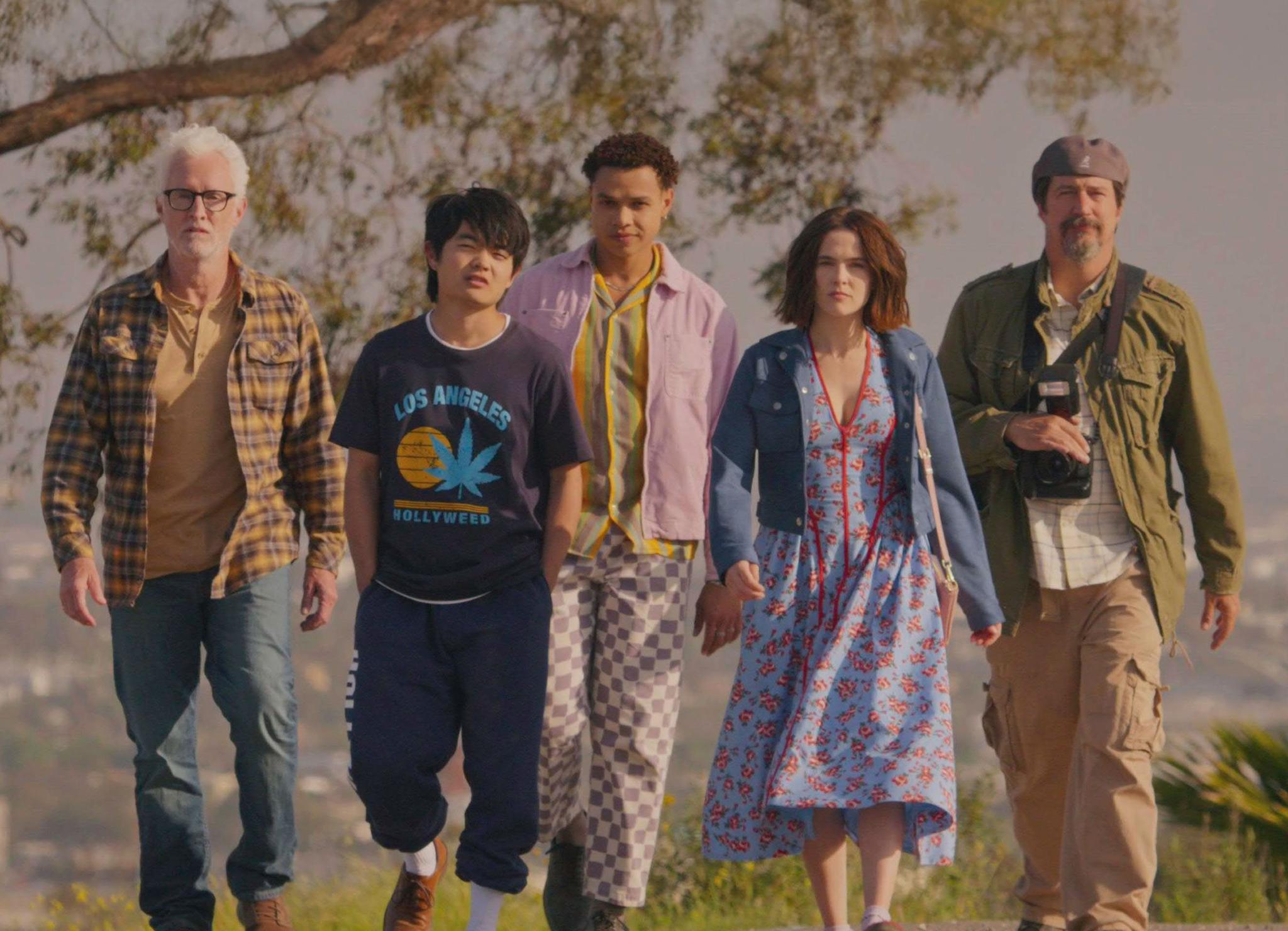
ADMITTEDLY, THERE ARE a few movies left in 2026. However, unless Denis Villeneuve does something unexpected and turns Dune: Part III into a wall-to-wall LOLfest, there’s a good argument to be made that David Wain’s wildly silly and deliciously daft Gail Daughtry And The Celebrity Sex Pass is the year’s funniest film. Here, Wain talks us through the best bits of his demented homage to an old classic. “As we were piecing it together, we started to realise it’s sort of like Wizard Of Oz,” he tells Empire. “We ran towards that.”
A TRUE FRIEND

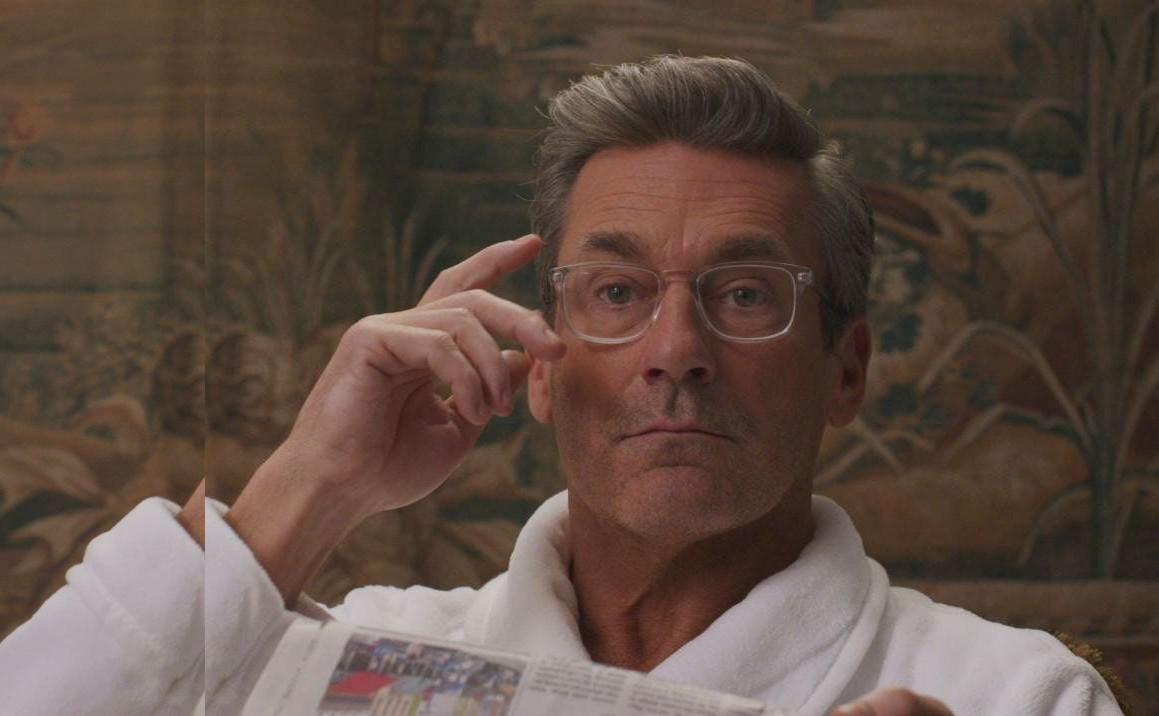
Very quickly, Wain and his co-writer/co-star, Ken Marino, set up the stakes. Smalltown Kansas hairdresser Dorothy Gale — sorry, Gail Daughtry (Zoey Deutch) — and her fiancé Tom (Michael Cassidy) decide upon a celebrity sex pass, i.e. the one celebrity with whom you can sleep without repercussions. Hers is Jon Hamm. His, on a whim, having just met her at a book signing, is Jennifer Aniston. However, much to Gail’s displeasure, Tom immediately acts on his, having sex with Aniston in the backroom of a bookshop. Wain wrote it for Aniston, with whom he worked on Wanderlust. “Her specific level of iconic is perfect, I think,” he says. “But there was no thought that she would ever do this. Within a day, she was on board.”
QUICK FIRED

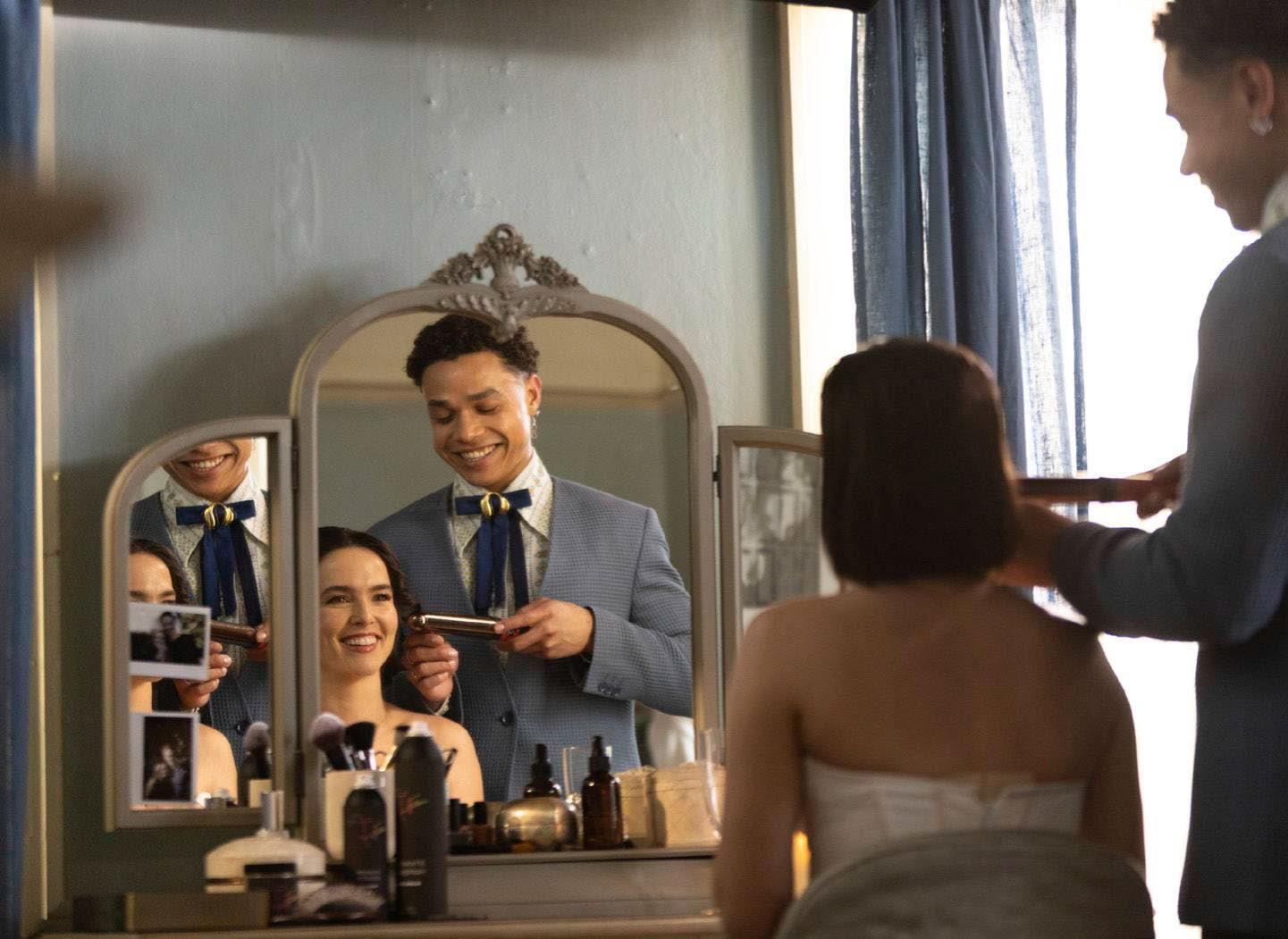
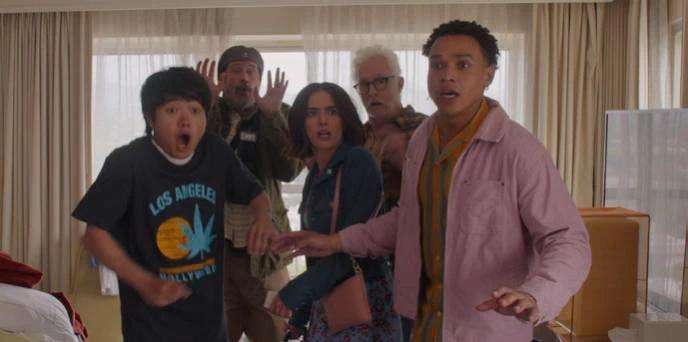
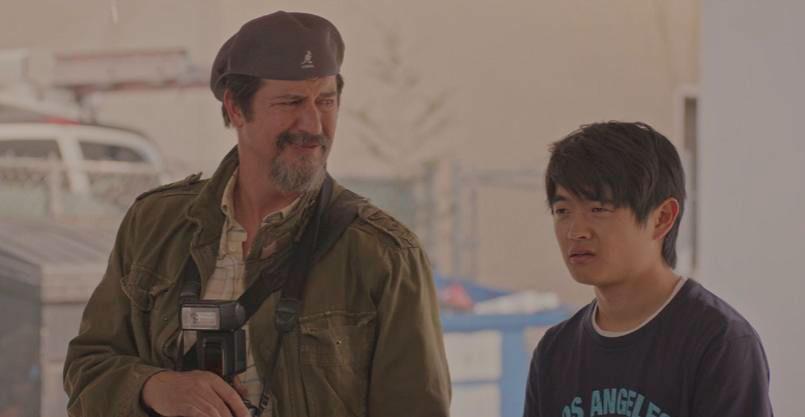
Gail and her friend Otto (Miles Gutierrez-Riley) — an anagram of Toto — head to Los Angeles for a convention, only for Gail to fixate on the idea of evening the score with Tom by finding and, well, fucking Jon Hamm. On their quest they recruit three companions, each of whom happens to need a brain, or a heart, or courage. Hamm’s Mad Men co-star John Slattery, playing himself as a complete loser, is the Cowardly Lion, lacking courage. Ken Marino’s paparazzo Vincent is the Tin Man, lacking a heart. And the Scarecrow stand-in, the brainless one, is Ben Wang’s delightfully dense Caleb, a young CAA assistant who is fired for being over-familiar with his boss. In a glorious textbook use of a hard cut, Wain transitions Caleb, literally mid-sentence, from confident to despondent, carrying his effects in a cardboard box. “That was one of the many contributions of our great editor, John Daigle,” says Wain. “I’m continually amazed at how shaving a few frames off a shot changes it from nothing to funny. With that one, we realised that if we chop out the middle, it was the funniest.”
A FAMOUS FACE

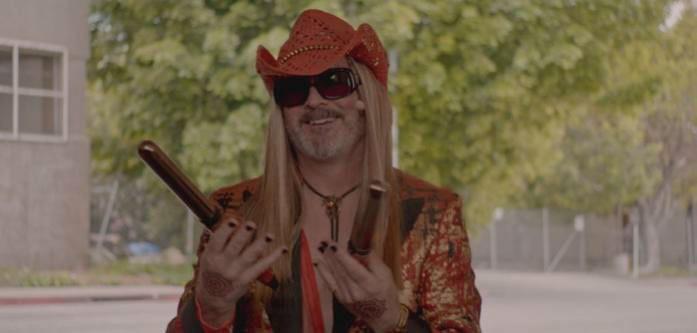
At one point, Joe Lo Truglio’s hapless henchman Sergio, tasked by Sabrina Impacciatore’s Wicked Witch Of The West-a-like, Ludovica, with finding and killing Gail for reasons nobody really need concern themselves with, heads to Grauman’s Chinese Theatre in LA to grill members of the public. One of whom immediately recognises him as Charles Boyle from Brooklyn Nine-Nine. “I get that a lot,” he retorts. “We anticipated that might happen,” says Wain. “Joe is pretty well-known, so I said to him, ‘Just roll with it.’ We were across the street with a super long lens, and no-one could see the camera. It was our little Nirvanna The Band The Show experiment.”
GETTING A FOOT IN THE DOOR

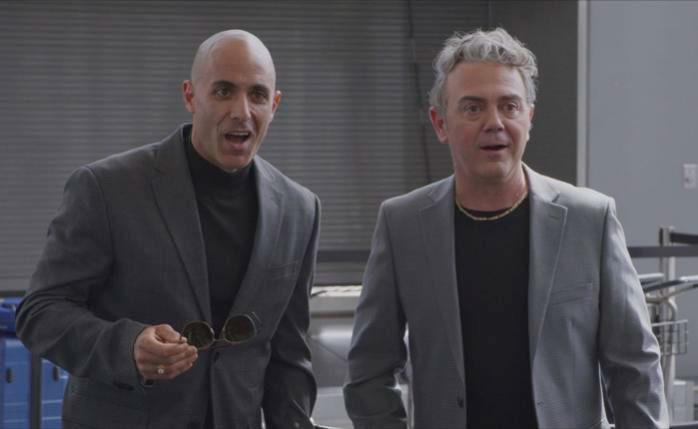
One of the great things about Wain’s movie is its deft deployment of daft, and virtually every type of gag you can think of. In possibly the film’s funniest moment, Gail and the gang head to the Chateau Marmont in search of Hamm, only for Hamm’s assistant Terrence (Tobie Windham) to slam the door on John Slattery’s foot. Again and again and again. And again. And again, as Slattery howls in pain, in a sustained comedic assault that takes the gag to the edge of unfunny, and then right back to funny again. “It’s definitely the moment that, in any audience, really gets them going,” says Wain. “It wasn’t necessarily written as a ‘take it too long’ type of idea, but when we shot it we realised how funny it feels to just keep going.” And going, and going, and going.
DING DONG, THE WITCH IS DEAD

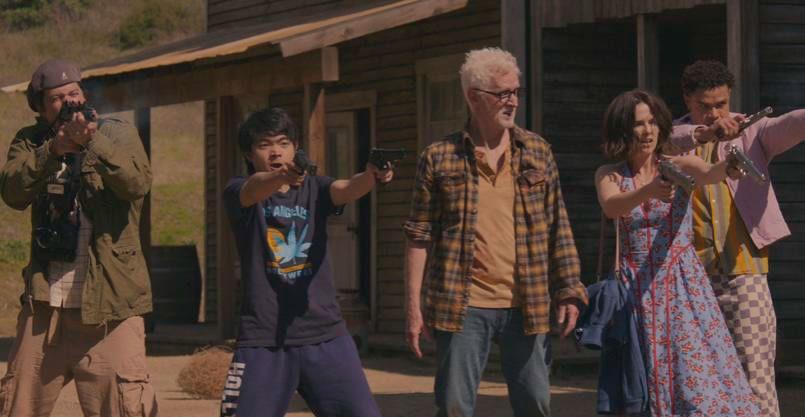
One unexpected wrinkle in Wain’s movie is the odd outbreak of ultra-violence. In one sequence near the end, Slattery finds his courage and takes out a bunch of anonymous henchmen. But the real capper comes when Gail takes on Ludovica and, there’s no point sugarcoating this, pummels her to death with her bare hands. You don’t get that kind of thing in The Wizard Of Oz. “You missed the deleted scenes that were just discovered with Margaret Hamilton and Judy Garland,” deadpans Wain. “This was our homage to that. There was an early script where Gail shot her in the head multiple times. We tried to pull back on that, and that’s what came out.”
SLAMMING THE HAMM

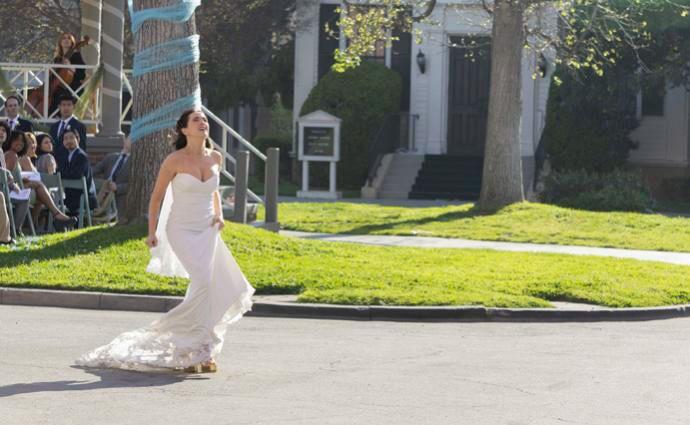
“One of the early thoughts was, since the whole plot involves, ‘I have to fuck Jon Hamm,’” says Wain, “that when she finally does, we don’t want to wussy out and not go there.” And how. Evil vanquished, Gail finally gets to meet the man behind the curtain — Jon Hamm, playing a vainglorious version of himself. After a few bumps in the road, Gail gets her wish and, in a very funny but tastefully shot sex scene, gets a generous helping of Hamm. But nothing in this film can be straightforward and Gail, in several shots, is seen not only taking the lead, but taking Hamm from behind. “The idea that she’s pegging him all the time felt in line with how I think of things,” Wain continues. “We’ve done that shot, going back to Stella (his comedy group with Michael Ian Black and Michael Showalter, who made an online series of shorts) in the ’90s.” It’s like the notion of faith constantly cropping up in Scorsese movies, but only with more butt stuff.
GOING POSTAL

Wain admits there were several different endings in contention for the film, before he went with “an extra idea we’d had, time permitting”: Fred Melamed’s mailman, Frank, who has been loosely narrating the story, closes things out with a direct address to camera that rapidly goes off the rails and turns into a rant about a local roofer named Scott Lindholm. “We’d forgotten to give it to Fred, until we were about to shoot it and he was like, ‘What?’” admits Wain. “So we had to put up some cue cards. All things considered, he did a great job.” And if you’re wondering about Scott Lindholm, he shows up in a post-credits scene, played by Toby Huss. “The story we wanted to tell was how bad Scott Lindholm is, and everything emanated from there,” laughs Wain.

GAIL DAUGHTRY AND THE CELEBRITY SEX PASS IS OUT NOW ON DIGITAL
First Month FREE

To continue enjoying the App, you can Start your free trial. No money will be taken today. After your first month, your monthly subscription begins unless you cancel first.
Subscription options are currently unavailable. Please try again later.
The free trial includes full access to the app for the first month, after which your subscription is charged automatically. All subscriptions and trials renew automatically unless they are cancelled. You can cancel at any time.

What’s up, docs?

JUDD APATOW ON HIS UNEXPECTED DETOUR INTO MAKING DOCUMENTARIES

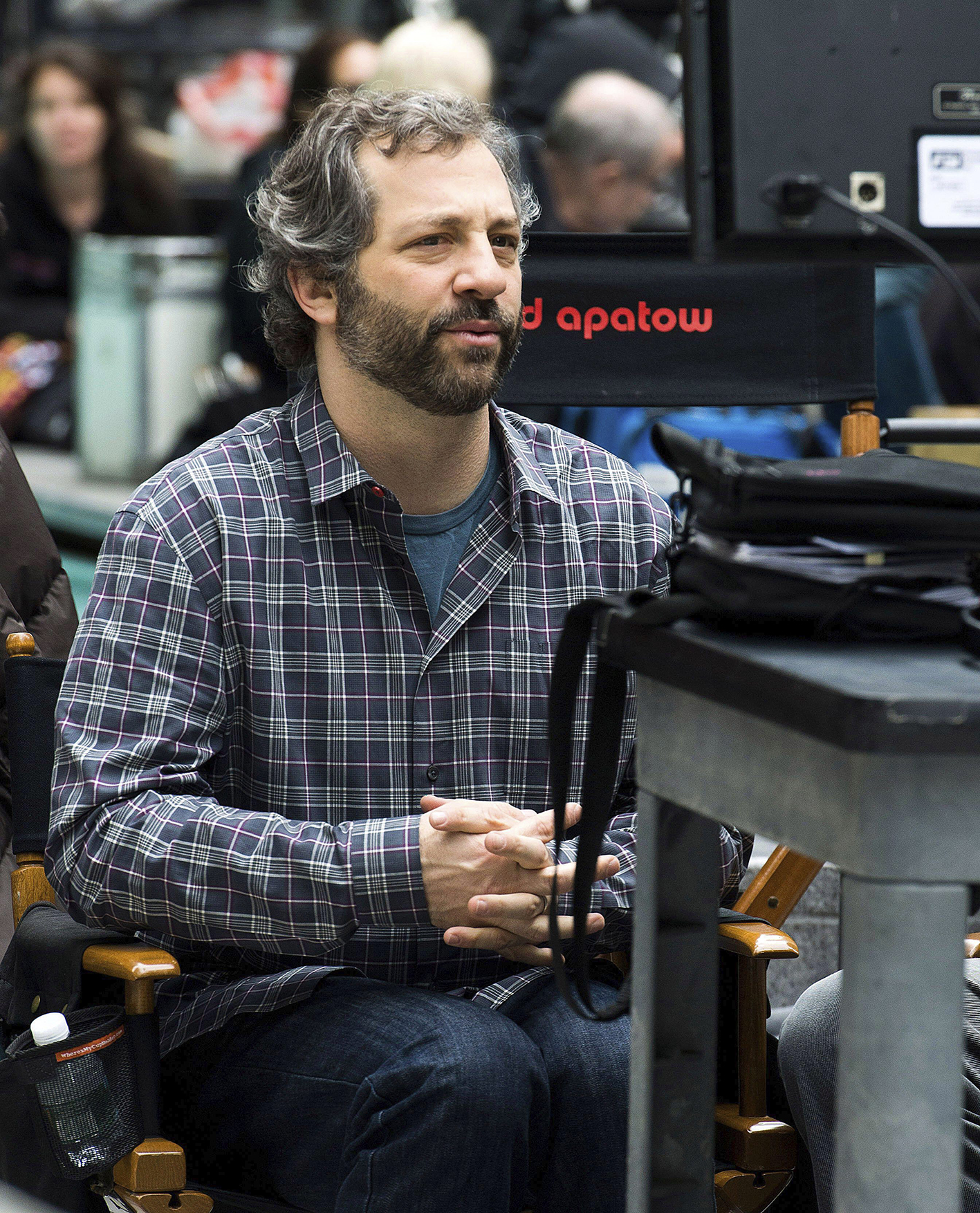
Comedy director turned documentarian Judd Apatow

HERE’S AN INTERESTING stat: since Trainwreck, back in 2015, Judd Apatow, who made his name as one of the chief architects of American big-screen comedy in the 21st century, has directed just two comedy movies — 2020’s The King Of Staten Island and 2022’s The Bubble — with a third, next year’s Glen Powell-starring The Comeback King, on the way.

In that time, Apatow has also directed, or co-directed, no fewer than seven documentaries, mostly about comedians, with not one but two — Norm: The Tale Of Norm Macdonald and Paralyzed By Hope: The Maria Bamford Story — hitting Netflix in October. If there were any doubt about it previously, there can surely be none now: Judd Apatow is a documentarian. “It’s less stressful to make documentaries,” he laughs, over a lengthy Zoom with Empire. “That’s fun for me, because there’s so much pressure when you make comedies, and everyone’s worried about how much they’re going to make. While you’re making documentaries you’re not thinking, ‘Oh man, if this does bad, it’s a worldwide humiliation!’”

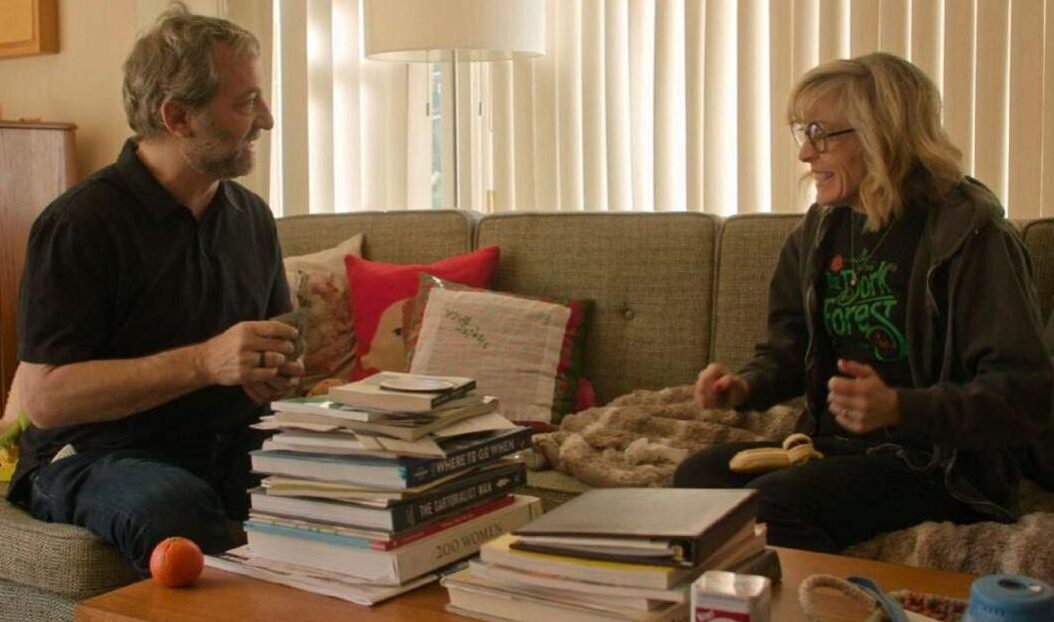
Apatow chats to Maria Bamford

Apatow has always had a penchant for chronicling comedians and their thought-processes. “I used to interview comedians in high school, before I started doing stand-up,” he says. “When I was 16, I would hunt everyone down, like John Candy and Jerry Seinfeld — a lot of them before they broke — because I was just such an obsessive.”

That’s something that has continued throughout Apatow’s rise up the comedy ranks, as writer/producer/director of movies like Anchorman: The Legend Of Ron Burgundy, The 40-Year-Old Virgin and Knocked Up. A few years ago he released Sick In The Head: Conversations About Life And Comedy, a compendium of those chats with comedy giants. In some ways, the documentaries are extensions of his comedic curiosity. “I’ve always liked being a bit of a historian about it,” he says. “As I’ve gotten older, I’m very interested in the emotional journey that parallels the creative journey. I think that’s what interests me most of all. How did you survive this difficult life, as Garry Shandling would say, and how did you turn it into comedy?”

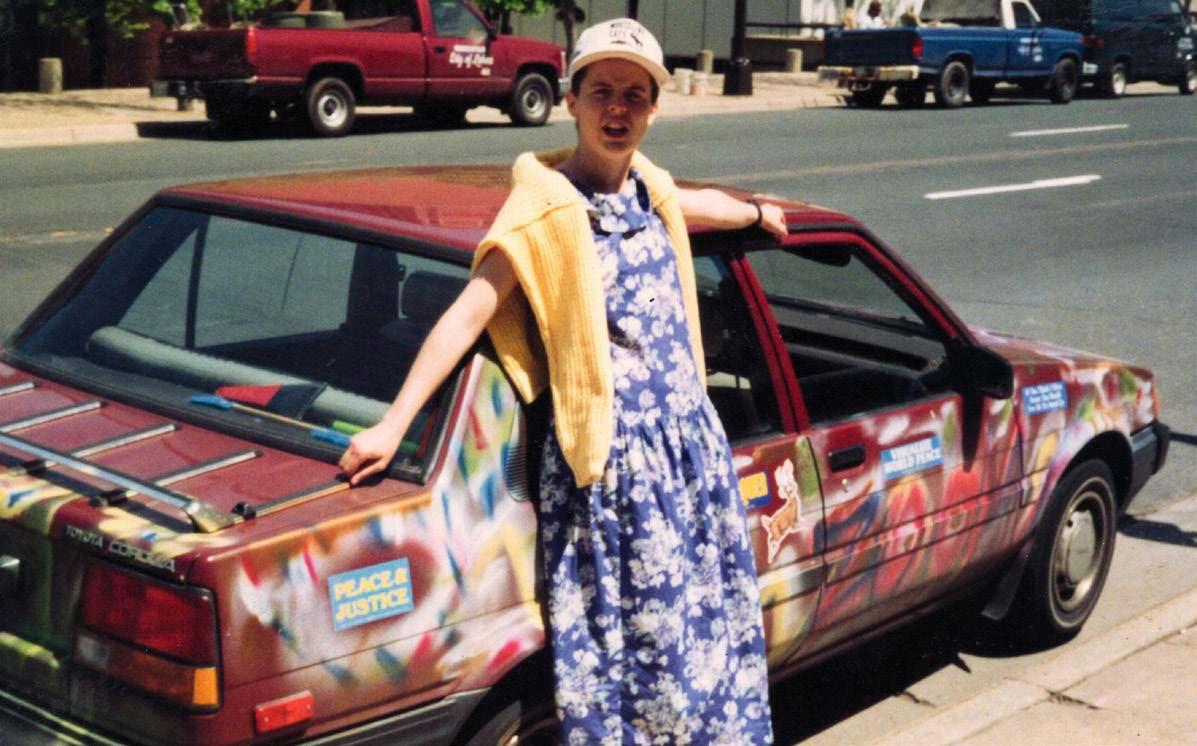
Bamford in her younger days

“At some point, you stop making it up.”

Shandling, the brilliant American comedian behind It’s Garry Shandling’s Show and The Larry Sanders Show, was a close friend of Apatow’s, and something of a mentor. And although Apatow’s transformation into a documentary-maker began with a 2016 episode of ESPN’s 30 For 30 about baseball players Darryl Strawberry and Dwight Gooden, and a full-length 2017 music doc about The Avett Brothers, things really kicked into gear with The Zen Diaries Of Garry Shandling, a four-hour-plus deep dive into Shandling’s life and career that Apatow started working on after Shandling died in 2016. “One of the things Garry said that had the biggest impact on me is that ‘all this work is trying to dig deep into the heart of people, to get to the deepest truths of them’,” says Apatow, “and documentary is the next step. At some point you stop making it up and you just see if you can detect it in life.”

That film, which like many of his docs was made for the small screen (in this case HBO), was a solo gig for Apatow that began in the wake of his grief. “I was just in a fog of sadness,” he admits, “and I edited together a series of videos highlighting different parts of his life and his career. I thought, ‘There’s definitely a Martin Scorsese-like two-part documentary here,’ like the Bob Dylan documentary. So they let me do it, and it always felt very Garry-guided. On some level, it felt like he was in charge.”

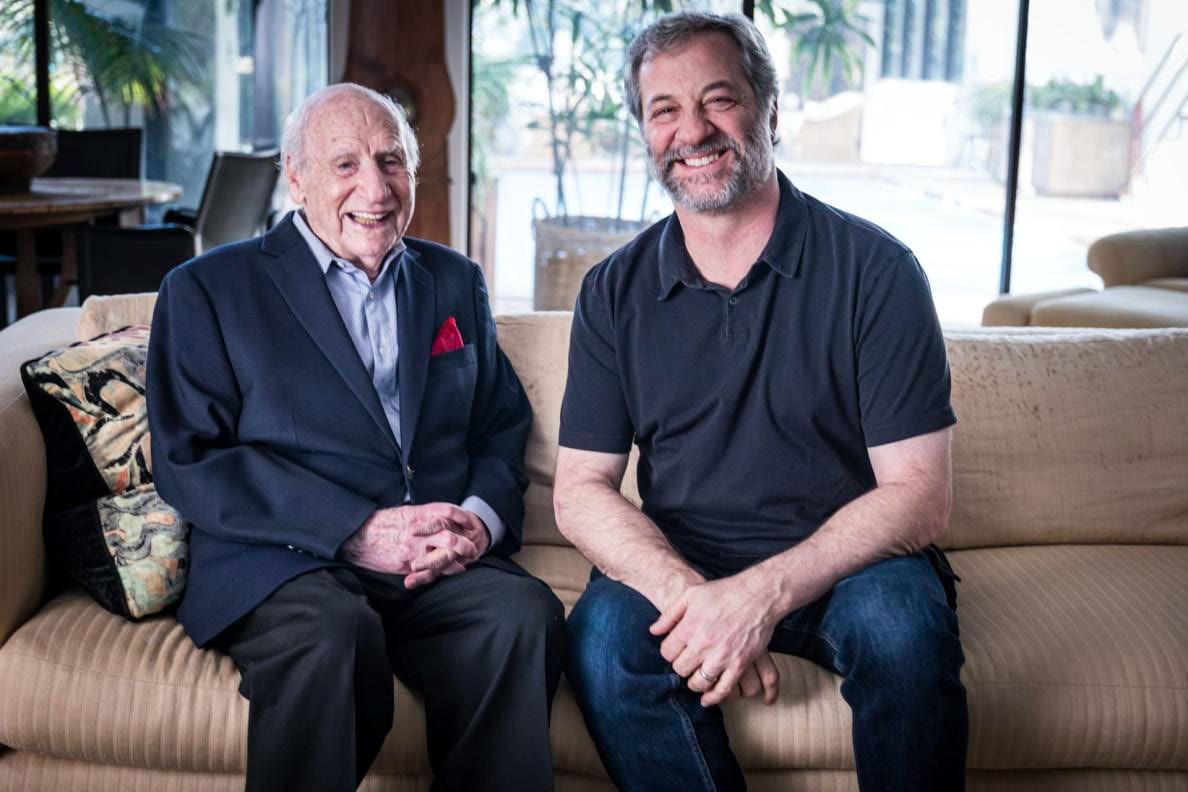
Apatow with living legend Mel Brooks

That opened a door for Apatow. His next comedy doc, George Carlin’s American Dream, was another two-part, four-hour behemoth that told the story of the caustic American comedian. That, along with May It Last: A Portrait Of The Avett Brothers and this year’s Mel Brooks: The 99 Year Old Man! (another four-hour epic), was co-directed with Michael Bonfiglio, who, as it turns out, had inadvertently started Apatow along this path.

“I met him when they were doing an episode of this TV show called Iconoclasts about Lena Dunham and myself,” says Apatow. “I watched him direct it, and he was interviewing us and then I saw the cut and thought, ‘This is one of the most talented people I’ve come across.’ I just felt like he gets it.”

One of the interesting things about Apatow’s latest docs is the choice of subjects. Garry Shandling, George Carlin and Mel Brooks are giants of comedy, known the world over (particularly in Brooks’ case). That, with the best will in the world, can’t really be said of Norm Macdonald, the late Canadian comedian best known, perhaps, for being fired from Saturday Night Live’s Weekend Update anchor role, and Maria Bamford, an American stand-up with a penchant for eccentricity. Both are brilliant, and successful, and beloved by their peers, but — for various reasons, including Macdonald’s healthy contempt for authority and Bamford’s struggles with her mental health — aren’t exactly household names. “I respect people who carved their own path and would not adjust for trends,” says Apatow. “And deserve more exposure.”

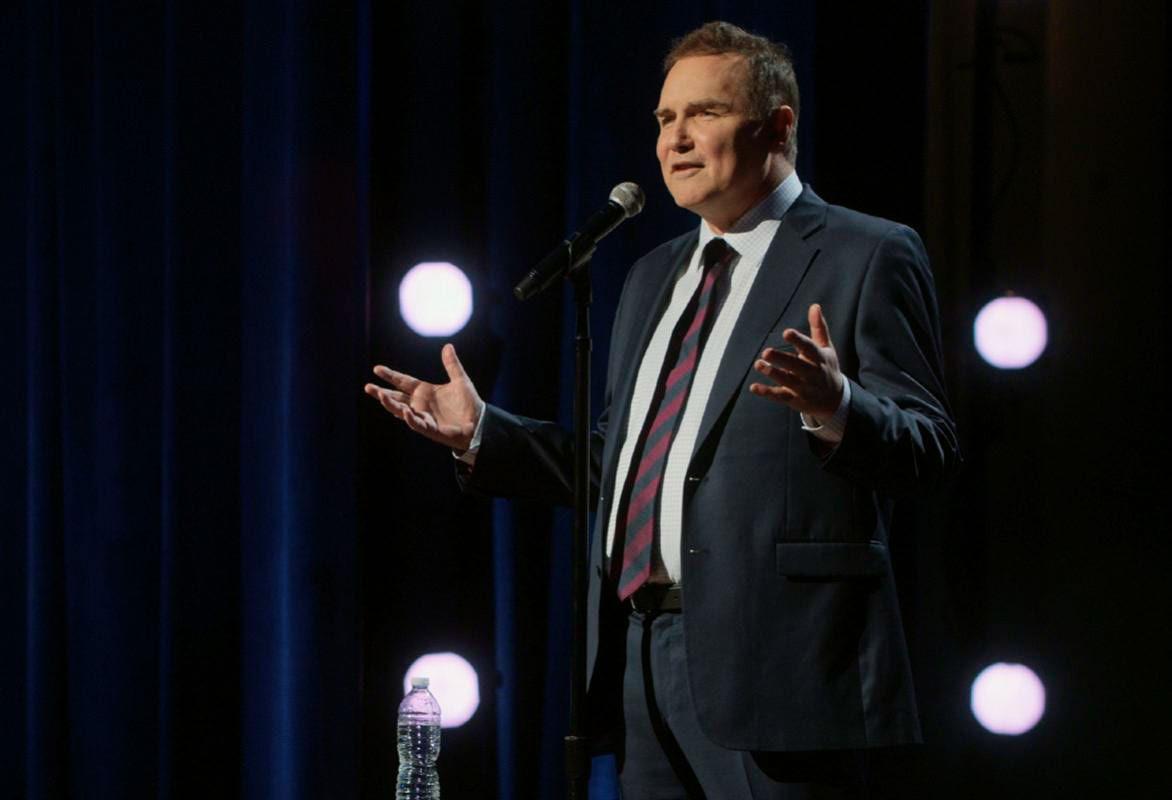
Norm Macdonald on stage

Apatow approached both films in vastly different ways. The Macdonald doc is entirely assembled from archival footage of Norm (who died in 2021) in action, either on stage or at SNL or on podcasts. “We’ll just show all the things that he gave to the world, all the ways he communicated,” says Apatow, “and hopefully it adds up to some sort of higher truth.” The Bamford documentary was shot fly-on-the-wallstyle, with Apatow and co-director Neil Berkeley shadowing Bamford for a number of years. “When life got really difficult she handled it so well, with so much strength and grace,” he says, “so it became a story that was very hopeful, about surviving and thriving.”

Both films are excellent and, thanks to copious footage from stand-up sets, very funny. They also likely won’t be the last comedy docs Apatow makes, although his next will be another music documentary, about the guitarist/singer Billy Strings. Perhaps, Empire muses, he can be persuaded to make one about a British comedian? “I love British comedy,” he says. “You never know, there may be a day when I’m annoying Jimmy Carr.” With all due respect to Jimmy Carr, we leave Apatow with some names for him to explore further, which he, ever diligent, writes down. Maybe, just maybe, in a few years’ time we’ll get Judd Apatow’s ‘Eranu: The Story Of Reeves And Mortimer’.

NORM: THE TALE OF NORM MACDONALD AND PARALYZED BY HOPE: THE MARIA BAMFORD STORY ARE ON NETFLIX NOW

First Month FREE

To continue enjoying the App, you can Start your free trial. No money will be taken today. After your first month, your monthly subscription begins unless you cancel first.
Subscription options are currently unavailable. Please try again later.
The free trial includes full access to the app for the first month, after which your subscription is charged automatically. All subscriptions and trials renew automatically unless they are cancelled. You can cancel at any time.

The Ranking: The movies of 1987

FOUR EMPIRE WRITERS TACKLE ONE ICONIC YEAR

OUR CRITICS

CHRIS HEWITT
Votes Evil Dead II, no matter the topic.
HELEN O’HARA
Nobody puts Helen in the corner.
JAMES DYER
Empire got him pushing too many pencils.
JAMIE GRAHAM
He wants the finest films available to humanity.

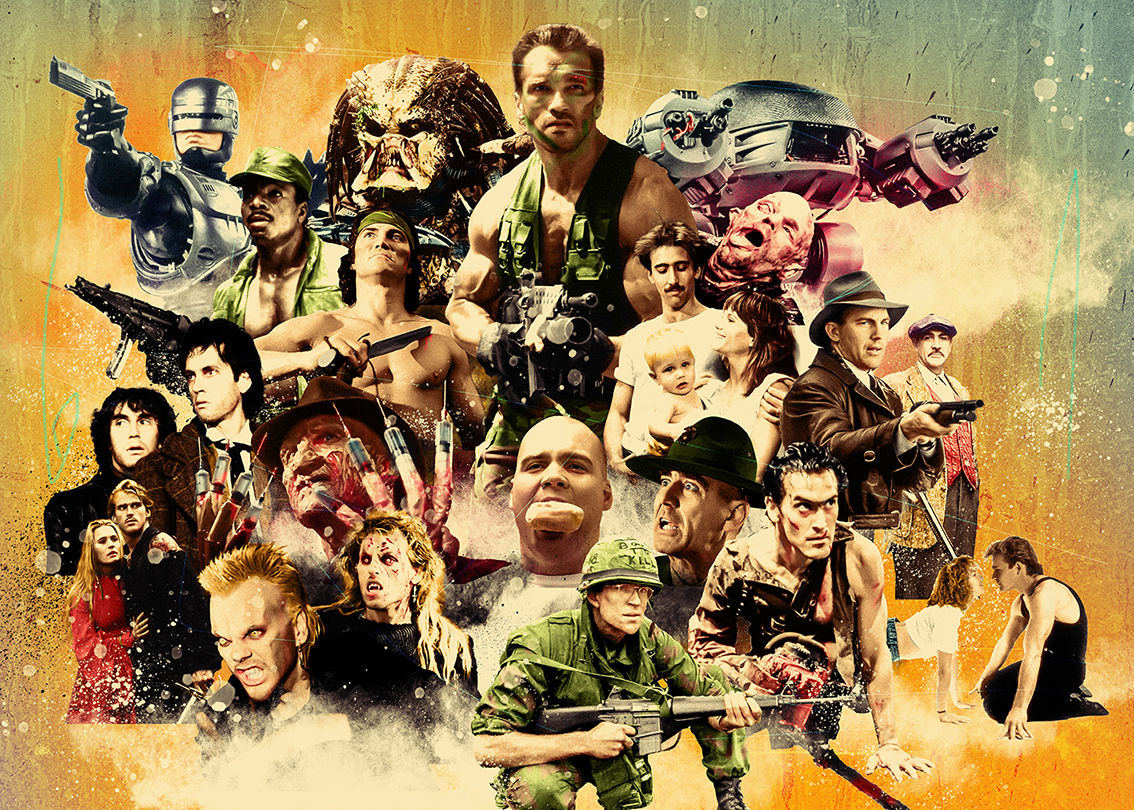
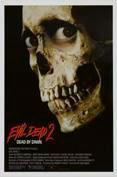
Chris: So, then, the movies of 1987. I wasn’t really thinking about ’87 as a landmark year. But looking back, it’s a really strong one. It’s also the year my favourite film of all time, Evil Dead II, was released.

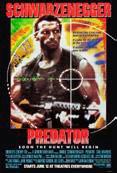
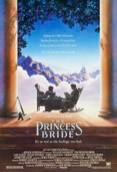
Helen: The Princess Bride is one I go to when called upon to answer this ridiculous question: “What is your favourite film of all time?” And there were some other contenders in 1987. Predator is one of my comfort movies.

Chris: I think that’s the case with a lot of these movies.

Helen: And there’s a lot of films I have enormous affection for that I didn’t vote for.

Chris: Police Academy 4: Citizens On Patrol. Steve Guttenberg’s last ride as Mahoney. So it was a really strong year, if you discount the fact that the big Oscars were won by The Last Emperor.

Jamie: Bloody Academy.

Helen: It’s very visually dazzling.

Jamie: I’m going to immediately go to horror. Angel Heart, Nightmare On Elm Street 3, Prince Of Darkness, Stepfather, Monster Squad, Bad Taste, Opera, Near Dark: these are just ridiculously good horror movies. What a banner year.

Chris: I had to internally wrestle with myself over Hellraiser or Prince Of Darkness, which is John Carpenter’s last great film.

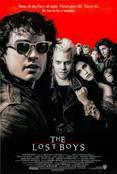
Helen: I have a lot of affection for The Lost Boys, even in its more ridiculous moments. It’s immense fun. It’s so quotable, and a great distillation of the ’80s.

James: I love that the vampires quite deliberately have a timelessness about them, hair notwithstanding.

Chris: Eh? It’s the most ’80s movie ever made!

Jamie: That’s one of the two horrors I voted for. I was 14 or 15 when it came out and I felt like, “This is the life I want.”

Chris: It’s one of the two best vampire movies of the ’80s, along with Fright Night. And it has one of the greatest closing lines in cinema history. But is it the best horror film of the year? Setting Evil Dead II aside on its own little plinth, of course.

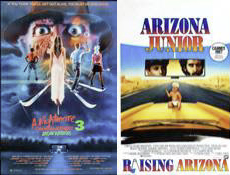
James: We were swapping around the video for Nightmare On Elm Street 3 at my prep school because we were all obsessed with Freddy Krueger. It’s scary — the gnarly puppet-master bit is still really unpleasant — but it’s incredibly funny.

Jamie: It’s the sequel that strikes the perfect balance between Freddy still being scary, and him becoming an icon with one-liners.

Chris: Do you consider films like Predator and Jack Sholder’s The Hidden, a film I adore, to be horrors? Or are they action films?

Helen: I mean, people are very much skinned in Predator. I do want to point that out. The first time I saw it, it was very scary.

James: To us now, it’s a really fun, enjoyable action movie. When you first saw that, it was really frightening because John McTiernan ratchets up the tension.

Helen: It’s so ludicrous. It’s macho, hypermasculine culture taken to this cartoonish degree.

James: It’s the most overtly masculine thing that has ever existed.

Jamie: Every six months or so, when I’m feeling a bit down or my wife’s away, I stick on Predator. It’s absolutely brilliant.

Chris: The economy of the storytelling is fantastic. All of Arnold’s guys get a moment to shine, and it might be Arnold’s best performance. But is it a great movie?

Helen: Nothing that makes us all feel this good can be a bad movie.

James: It works as an action movie, it works as a horror, it works as a sci-fi, it’s incredibly funny. But is it high drama? Yes, yes it is.

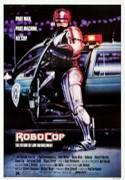
Chris: 1987 was a good year for guys with guns. It’s the year of the first Lethal Weapon, and RoboCop.

Jamie: I think RoboCop is one of the great sci-fi movies. It’s so clever, it’s got all the satire, it’s a brilliant action movie, and it’s so fucking gory.

Chris: A lot of it is played for laughs, but Murphy’s death is really upsetting.

Helen: My heart didn’t lead me to RoboCop on this occasion. It’s one I admire more for its satire than for its action or characterisation.

James: I seem to recall the tabloids having a field day over how violent it was, and it is very gnarly. But as with so many of the films from 1987, there’s so much great dialogue in there.

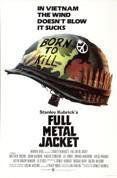
Chris: I’ll buy that for a dollar. Now, Stanley Kubrick’s Full Metal Jacket is not an action film, but it does have guys with guns. Where do you stand on his penultimate film as director?

Helen: Admire rather than love. It’s not an easy film to watch even now. It’s still quite traumatic.

Chris: It’s very much a film of two halves, Brian. I prefer the first half, with Gomer Pyle and the training, and R. Lee Ermey’s iconic performance.

James: This came a year after Platoon, and it’s a different kind of reckoning with the legacy of the Vietnam War.

Jamie: In that first half, Kubrick’s style is so perfect for that material because he’s so clinical. But the second half is really good as well. The transition when it cuts to ‘These Boots Are Made For Walkin’’ is just fantastic.

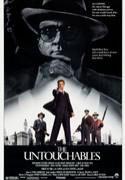
Chris: Ermey did not get nominated for Best Supporting Actor. Crazy. Mind you, Sean Connery won for The Untouchables.

Helen: He is great, despite playing an Irish character with that accent. I love The Untouchables. I used to watch it every Sunday morning. Talk about incredible, quotable lines. “He pulls a knife, you pull a gun.”

Chris: Enough of this quoting shit.

Helen: It’s so good.

Chris: Brian De Palma lording it over the set-pieces. That central relationship between Connery and Costner is magnificent. It’s so stylish.

Jamie: I love The Untouchables, but when I think of De Palma, I think Carrie, Scarface, Carlito’s Way. You guys are talking about it with such affection and it’s not in my top ten.

Chris: It was also a great year for comedy. The aforementioned Police Academy 4, ahem. Three Men And A Baby. Moonstruck and Nicolas Cage’s offbeat energy. Holly Hunter had a great year as well with Broadcast News. And she and Cage were both in Raising Arizona.

Helen: That’s sort of a Looney Tunes cartoon that just happens to have people in it. It’s barmy and I think it’s kind of brilliant, but you have to be in a particular headspace for it.

James: Let’s just say my love of Coen films neither begins nor ends there.

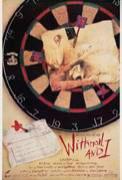
Helen: I think in terms of quotable comedies that are adored by filmmakers, Withnail And I is not a film I actually loved first time around. It wasn’t until recently when I rewatched it that I was really sold on its greatness.

Jamie: I first saw it at uni and you love it then for the drinking and the dialogue, and it’s the funniest thing you’ve ever seen. But as you get older, you see how much anger and resentment and self-loathing there is in it. And that ending is just a killer.

Chris: It’s so beautiful. Richard E. Grant has the showier role, as Withnail, but it doesn’t work without Paul McGann as Marwood.

Helen: I think The Princess Bride also has an incredibly smart script. And it’s so funny. It’s a comedy Who’s Who, right down to the tiniest roles. It’s a perfect film, and one of the two great Peter Falk roles from that year, with Wings Of Desire.

Chris: Hearing your passion for it makes me want to go back and revisit it, to see what you see. By the same token, you’re all going to immediately watch Evil Dead II, right?

James: I actively dislike Evil Dead II.

Jamie: It’s not as good as Chris makes out, but it’s fucking brilliant. But I love your passion for it, Chris.

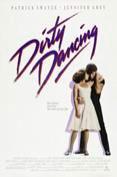
Chris: Thank you, Jamie. I remember in 1987 not being able to move without bumping into a song from the Dirty Dancing soundtrack.

Helen: Talk about great soundtracks. I think if anything, Dirty Dancing is underrated. It’s a pretty good teen drama that just happens to have this iconic dance scene at the end.

James: Is it underrated? It’s talked about a lot.

Helen: As a quote-unquote chick flick, some male critics tend to be sniffy about that.

Chris: When Empire goes to karaoke, we always sing ‘(I’ve Had) The Time Of My Life’. (Bellows) “JUST REMEMBER!”

Jamie: There are two types of people in the world: people for whom ‘Be My Baby’ is Mean Streets, and people for whom ‘Be My Baby’ is Dirty Dancing.

Helen: I’m the Dirty Dancing type.

Jamie: I’m actually both.

Helen: So there are three types of people in this world.

Chris: Alright, enough squabbling. Let’s vote!

THE TOP TEN

1. PREDATOR
2. ROBOCOP
3. THE LOST BOYS
4. THE UNTOUCHABLES
5. WITHNAIL AND I
6. EVIL DEAD II 7
7. FULL METAL JACKET
8. THE PRINCESS BRIDE
9. DIRTY DANCING
10. A NIGHTMARE ON ELM STREET 3: DREAM WARRIORS/ RAISING ARIZONA

First Month FREE

To continue enjoying the App, you can Start your free trial. No money will be taken today. After your first month, your monthly subscription begins unless you cancel first.
Subscription options are currently unavailable. Please try again later.
The free trial includes full access to the app for the first month, after which your subscription is charged automatically. All subscriptions and trials renew automatically unless they are cancelled. You can cancel at any time.

The Empire Masterpiece: Broadcast News

JAMES L. BROOKS’ ROMCOM IS STILL SWITCHED ON

The press gang: William Hurt

“NO MAJOR STARS, no car chases, a bland title, articulate characters who can’t stop talking and a heroine who won’t sleep with the leading man because she doesn’t like his ethics.” In possibly the most ‘don’t threaten us with a good time’ review of all time, that’s how The New York Times described James L. Brooks’ romantic comedy Broadcast News upon release in 1987. (Don’t threaten us with a good time!) Perhaps because of the lack of car chases, the film was only a modest success upon release and, while it has its fair share of fans (Greta Gerwig quoted a line from it to us recently; see our recent Narnia cover story), even now it rarely makes lists of top ten comedy-dramas, romantic comedies, Empire’s own ranking of the movies of 1987, or films about journalism: too slippery and original and unusual, perhaps, to neatly fit into a pigeonhole.

But it is a really striking, memorable, sharply observed piece of work: an old-school screwball comedy of the kind Cary Grant might once have starred in, imbued with a thrilling late-’80s energy and drive, and a rare richness of emotional intelligence in its characters. And its story — of three hungry, ambitious young journalists working in a pressurised television-news environment, feeding off both their careers and each other — plays as both a celebration of the press pack and an eerie elegy of a journalistic standard that would soon be lost.

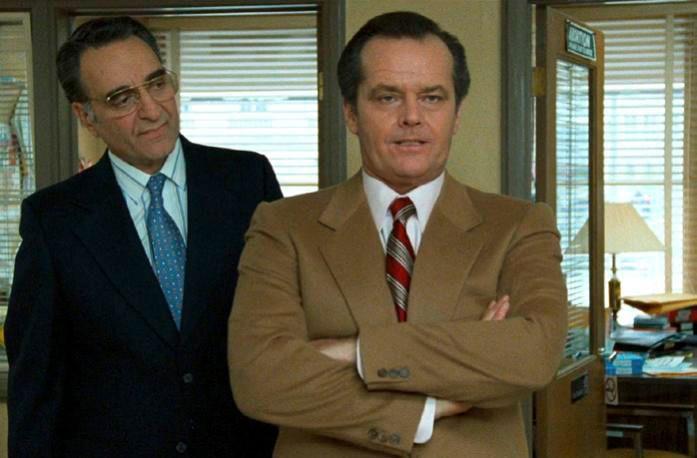
Peter Hackes and Jack Nicholson

James L. Brooks is many things — a comedy legend (The Simpsons wouldn’t exist without him and his company, Gracie Films), and an Oscar-winning writer, producer and director. But he’s a newsman at heart. Born in Brooklyn in 1940 and raised in New Jersey, he was an active and eager participant in his high-school newspaper, once even securing an interview with jazz legend Louis Armstrong. Later, as a young man, he worked at CBS News, and fell in love with the intoxicating buzz and excitement of live television news, a fascination that would stick with him as he moved into fiction, creating the 1970s TV hits The Mary Tyler Moore Show and Lou Grant — both set in newsrooms. After his second film as writer-director, the 1983 weepie Terms Of Endearment, scooped up Best Director and Best Picture Oscars, Brooks found himself in an enviable position, given near-free rein to do more or less whatever he wanted. Of course, he wanted to tell a story about people who tell stories for a living.

Feeling out of depth after years away from the news industry, Brooks embarked on over a year’s worth of research on television news. At the 1984 Republican convention, he came across a brilliant young White House correspondent who was dating two men simultaneously, which would inspire the film’s quasi-love triangle; veteran CBS producer Susan Zirinsky also proved to be a key influence, acting as a consultant on the film. “I wanted to catch a new kind of woman,” he later explained.

What he caught, in ace TV producer Jane Craig (played by Holly Hunter), would be one of cinema’s most interesting and well-studied depictions of a Complex Female Character; that it originated with a male writer-director makes it all the more of an achievement. Jane is a tenacious, principled, romantic, formidable and forthright woman, but also lonely and sad.

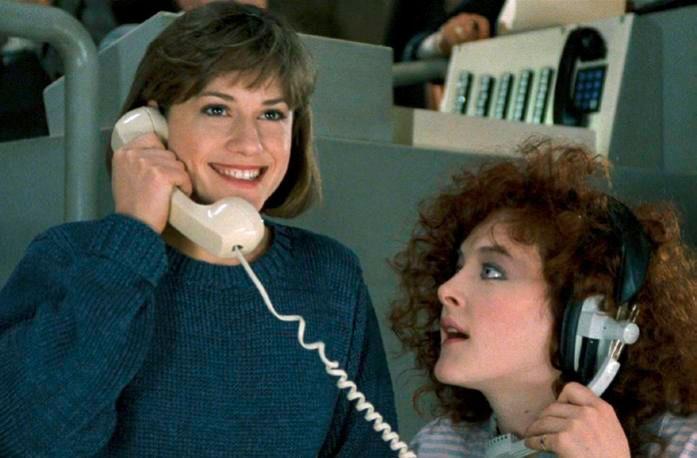
Holly Hunt with Joan Cusack

She is, as one character declares her, “always the smartest person in the room”, a fact she laments as “awful”. In one extraordinary scene, Jane takes the phone off the hook, checks her watch, and quietly begins to cry. It seems like a regular ritual, and indeed, Jane weeps suddenly and inexplicably multiple times in the film — a brave and compelling choice for a comedy. (What is even more extraordinary is that Hunter stepped into the role two days before filming commenced, taking over from Debra Winger after the latter became pregnant.)

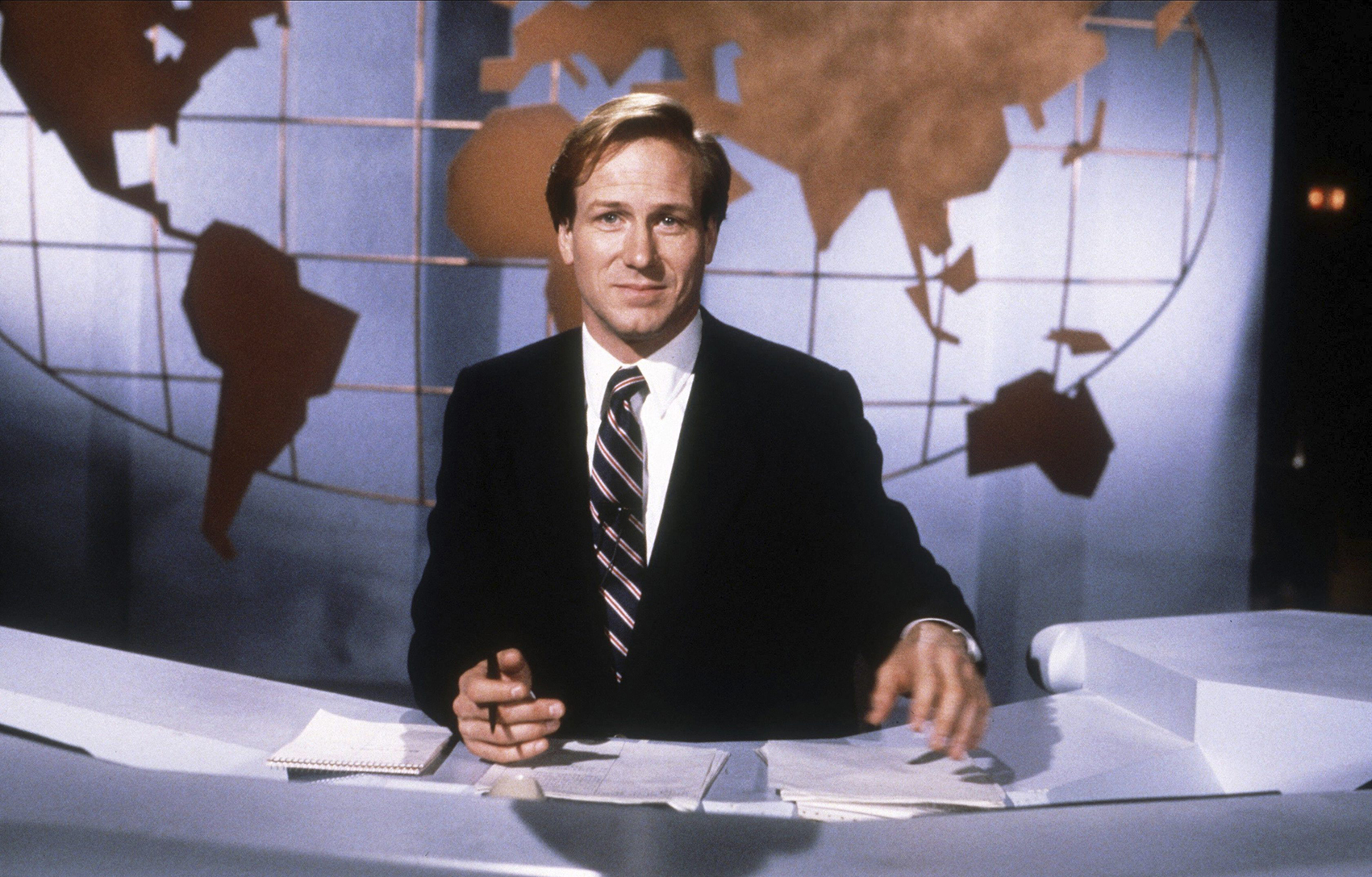
Then along comes slick young hotshot Tom Grunick (William Hurt) and Jane finds herself both enamoured by his charisma and network-TV good looks, and simultaneously put off by his tabloidy soft-news approach to the job. A former sports reporter, Tom is insecure about his intellect, but with his blond sweep of hair he is every inch the anchorman-in-waiting.

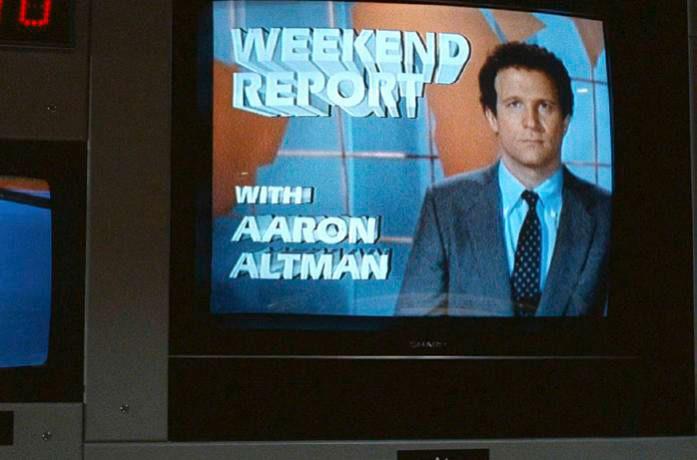
Then there’s the more nebbish, witty reporter Aaron Altman, played by Albert Brooks (no relation to James — in fact, Brooks’ real surname is Einstein. Yes, he’s Albert Einstein. No relation there either). A longtime ally and intellectual accomplice of Jane, Aaron holds unrequited feelings for her and nothing but contempt for Tom. Jane and Aaron advocate vehemently for each other and share the kind of lived-in male-female friendship that would be echoed two years later in When Harry Met Sally. When Aaron says, “I’ll meet you at the place near the thing where we went that time,” Jane knows exactly what he means.

Albert Brooks

Tom and Aaron are more antagonistic, but Brooks never plays it too bluntly. “You’re a prick,” says the former to the latter at one point. “In a great way.” These are grown-up relationship dynamics, with Brooks’ constantly surprising script plausibly depicting how these sometimes self-involved professional adults handle conflict. And the romance and erotic charge between them comes via their work, through the pulsing electricity and panic of live television. (“What a feeling having you inside my head,” Tom tells Jane, after being produced by her. “It was like great sex.”)

It feels appropriate, then, that — spoiler for a 40-year-old film — this is a rare romantic comedy that doesn’t finish with the guy and the girl ending up together. Radically, Jane chooses neither suitor, and ends up happier for it. In mainstream Hollywood, this concept was nothing short of revolutionary, a gentle rebuke of heteronormativity in favour of more feminist alternative options. And though we leave our three heroes in a happier place, there is a melancholy note weaved underneath, with mass lay-offs at the TV station and a passing of the old guard foreshadowing the kind of sensationalist cable news that now dominates the American media landscape.

Broadcast News predicts the future we now live in, the one Jane and Aaron feared might be just around the corner. In our age of misinformation and social media, it ought to be taught in every journalism school in the land. While they still exist.

BROADCAST NEWS IS OUT NOW ON DVD, BLU-RAY AND DIGITAL

First Month FREE

To continue enjoying the App, you can Start your free trial. No money will be taken today. After your first month, your monthly subscription begins unless you cancel first.
Subscription options are currently unavailable. Please try again later.
The free trial includes full access to the app for the first month, after which your subscription is charged automatically. All subscriptions and trials renew automatically unless they are cancelled. You can cancel at any time.

Picks of the month

1. THE ODYSSEY

OUT NOVEMBER 18, DVD/BR/4K/DIGITAL

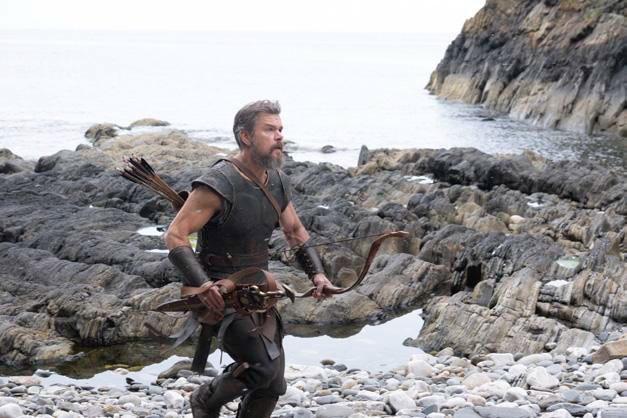
Be sure to practise xenia by showing guests your copy of Christopher Nolan’s questing epic, in which warrior-king Odysseus (Matt Damon) faces giants, witchy-goddess Circe (a standout Samantha Morton) and some god(s)-awful weather on his return home from the ransacked city of Troy. Only Nolan could have turned Homer’s foundational poem into such a thunderous blockbuster. Even played at home, shrunk down from IMAX screens, it’s enough to make a Cyclops’ eye bulge.


2. THE RIGHT STUFF

OUT DECEMBER 7, 4K

In space, no-one can hear you scream, “Bravo!” Philip Kaufman’s space-race epic deserves all the plaudits, bolting riveting drama to awe-inspiring spectacle as it tracks the selection, training and epochal voyages of the Earth-orbiting Mercury astronauts. Scott Glenn, Ed Harris and Dennis Quaid are among the magnificent seven who are duly celebrated in this vast space Western.


3. WILD AT HEART

OUT NOVEMBER 23, 4K

…and weird on top. Yes, it’s time to slip into your snakeskin jacket and hitch a ride with lovers on the lam Sailor (Nicolas Cage) and Lula (Laura Dern) as they motor through the American South in 4K. David Lynch’s violent follow-up to Blue Velvet mixes Elvis, The Wizard Of Oz and classic noir to mind-blowing effect. Just ask Bobby Peru (Willem Dafoe).


4. TEENAGE SEX AND DEATH AT CAMP MIASMA

OUT DECEMBER 14, DVD/BR/4K/DIGITAL

Jane Schoenbrun’s machete-sharp dissection of the psychosexual tropes of slasher movies bursts with brains and guts, as queer indie director Kris (Hannah Einbinder) looks to knowingly reboot the flesh-and-fluids ‘Camp Miasma’ franchise by casting OG Final Girl Billy (Gillian Anderson). Would make an ace double bill with In A Violent Nature.

First Month FREE

To continue enjoying the App, you can Start your free trial. No money will be taken today. After your first month, your monthly subscription begins unless you cancel first.
Subscription options are currently unavailable. Please try again later.
The free trial includes full access to the app for the first month, after which your subscription is charged automatically. All subscriptions and trials renew automatically unless they are cancelled. You can cancel at any time.